
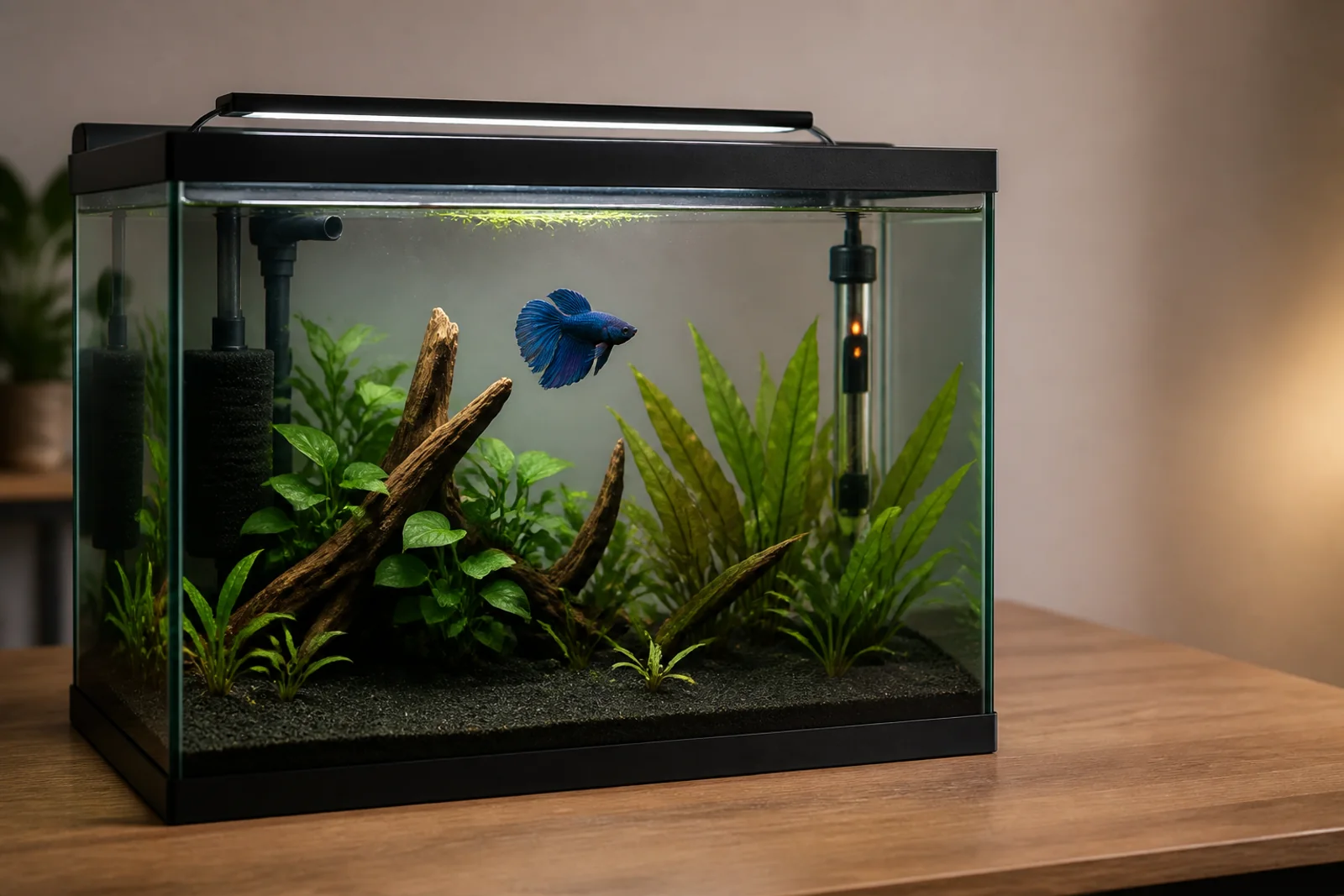
If you have just brought a betta home in a plastic cup, someone has probably told you he will be fine in a bowl. That advice is why this article exists.
The short answer is five US gallons, minimum, for one betta. Not because five is a magic number, but because below it the water chemistry moves faster than you can react to, and almost everything that kills a pet betta starts there.
The cup was never meant to be housing
Bettas arrive at shops in cups because male bettas fight. Shipping them individually is the only practical way to move them, and the cup keeps them apart in transit.
That is packaging. The farms that breed these fish do not keep them in cups. Ornamental fish for the home aquarium are Florida’s most valuable aquaculture product, and those operations run heated, filtered, tested water. The fish leave healthy.
What fails is the last mile: the cup, the shelf, and the bowl someone carries home believing it is enough.
What tank size actually changes
Most explanations of tank size talk about swimming room. That matters, but it is not the main thing. The main thing is dilution and stability.
Dilution
A betta produces waste constantly. Waste becomes ammonia, which burns gills and fins and is lethal well before it is visible.
The same amount of ammonia in one gallon of water is five times more concentrated than in five gallons. Your fish does not experience “some ammonia”. He experiences a concentration, and concentration is volume dependent.
This is why small tanks fail suddenly. There is no buffer. A skipped water change in a one gallon is a crisis by the weekend; the same lapse in a ten gallon is a slightly worse test result.
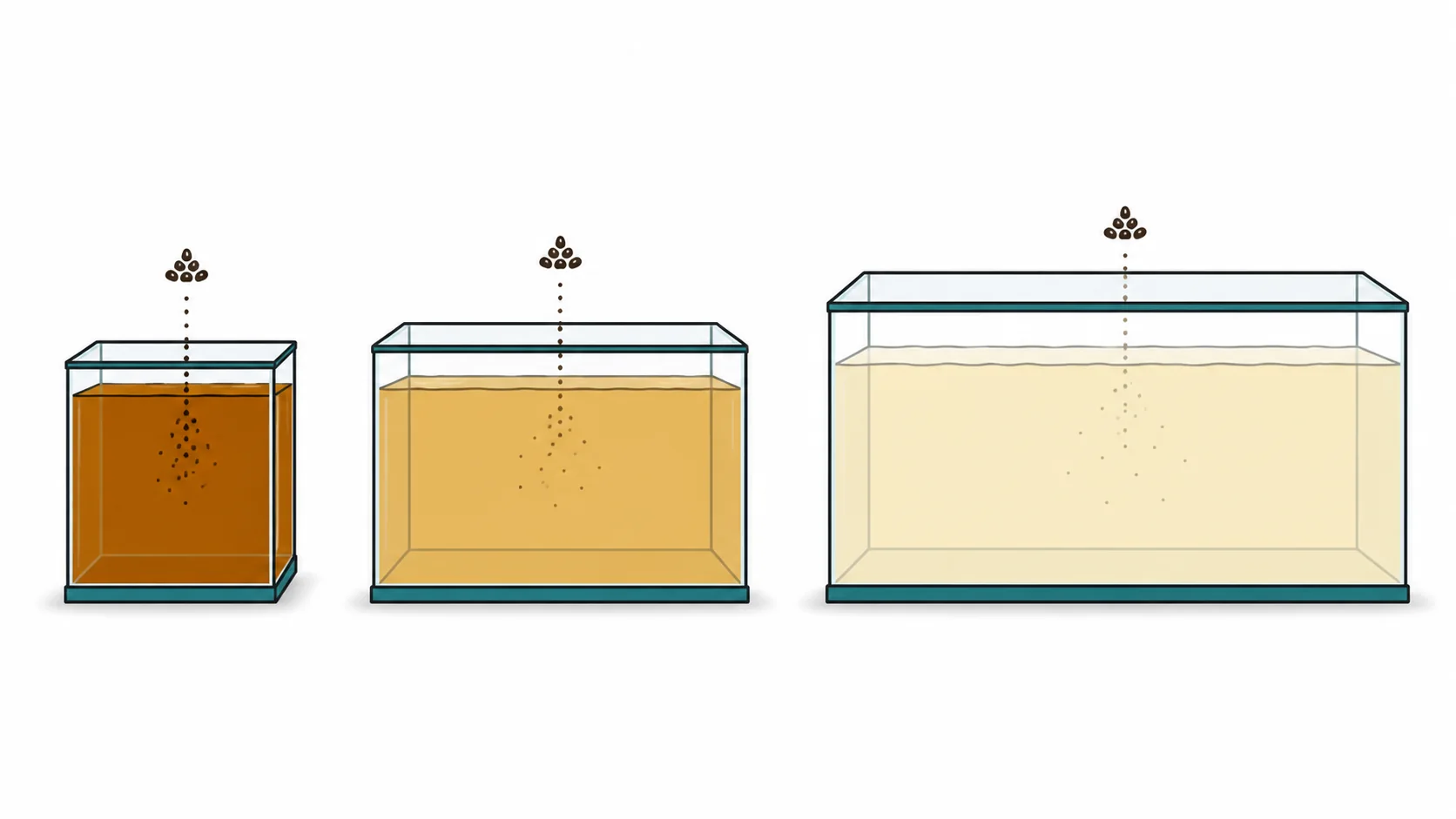
- 1 gallon
- 5 gallons
- 10 gallons
Temperature stability
Bettas are tropical and need roughly 25 to 28 °C. Small volumes track room temperature almost exactly, so a betta in a bowl rides every heating cycle, open window and cold night in your house.
Temperature swings suppress the immune system. A great deal of what gets treated as mystery illness is a fish that has been repeatedly chilled.
Reliable heaters also have a practical floor. Below about five gallons, most adjustable heaters either do not fit or cannot regulate accurately, and cheap preset ones frequently overshoot.
Biological filtration
A cycled tank grows bacteria that convert ammonia to nitrite and then to the far less harmful nitrate. Those bacteria live on surfaces, mostly in your filter and substrate.
Small tanks hold less surface area and less water, so the colony is smaller and more easily overwhelmed. Cycling a one gallon reliably is genuinely difficult. Cycling a five gallon is routine.
What the welfare guidance says
The RSPCA recommends an aquarium of 20 litres or more where possible, with 10 litres considered the absolute minimum, alongside appropriate filtration, heating, planting or hiding places, and regular partial water changes.
Twenty litres is a little over five US gallons. Ten litres is about 2.6. Note that the minimum comes bundled with filtration and heating, not instead of them.
The labyrinth organ argument
You will be told bettas can breathe air, so they do not need much water. This is half true and completely misleading.
Bettas do have a labyrinth organ, and they do take oxygen from the surface. It is an adaptation to warm, still, low-oxygen water such as rice paddies and floodplains.
Breathing air solves oxygen. It does nothing about ammonia, nitrite, temperature, or the room to establish territory. A fish that can breathe in bad water is still living in bad water.
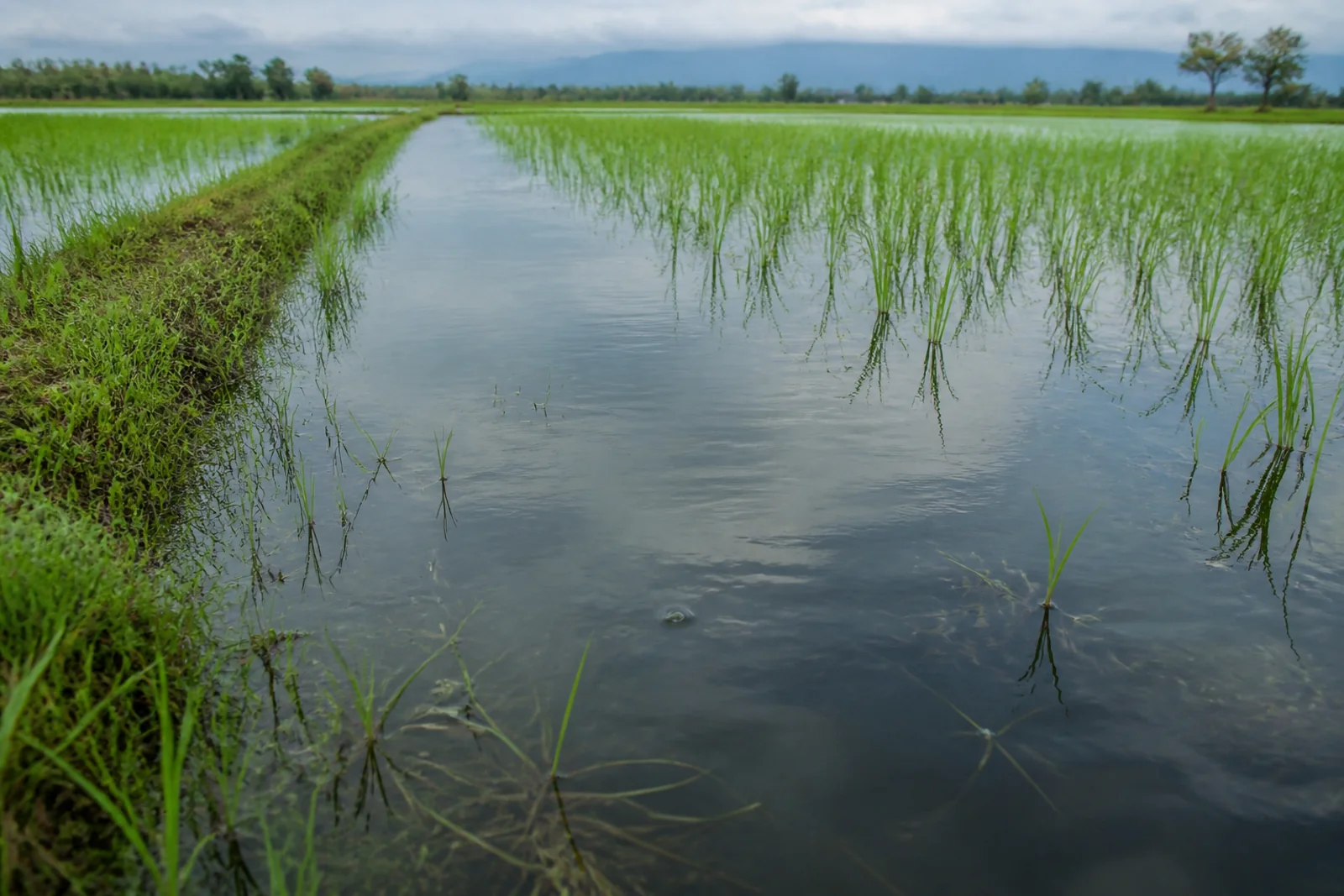
The rice paddy comparison also does more work than it should. A paddy is shallow, but it is enormous, connected to other water, and constantly refreshed. It is not a small volume. It is a very large one that happens to be shallow.
Shape matters as much as volume
Two tanks of the same volume are not equally good.
Long and shallow beats tall and narrow. Bettas surface to breathe, so a tall column forces a longer trip up and back. They are also weak swimmers with heavy finnage, and they struggle in strong currents.
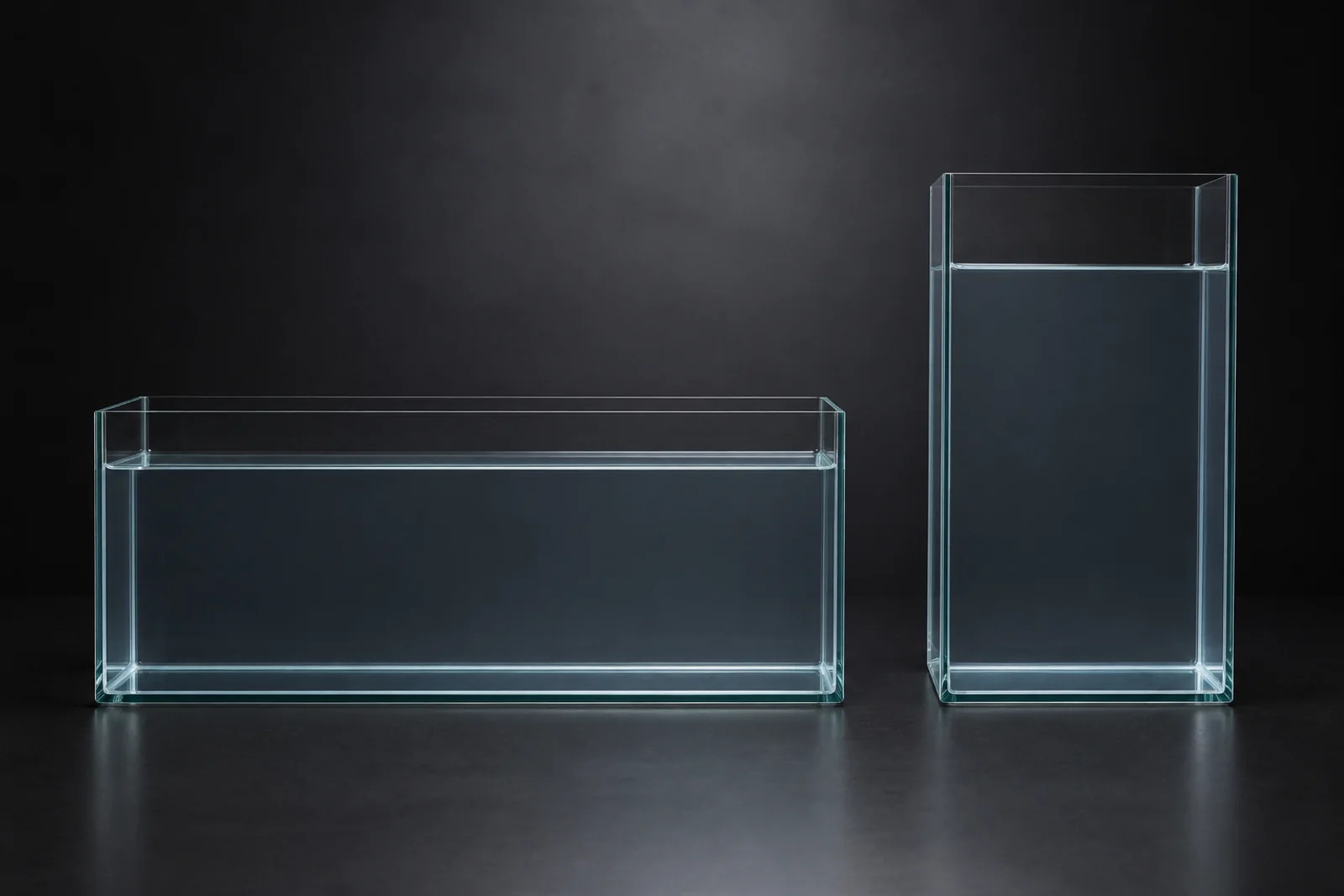
Practical shape guidance:
- Prefer footprint over height. A 10 gallon “long” is better than a 10 gallon tall.
- Keep the water surface open and wide; floating plants are fine, sealed lids are not.
- Always use a lid. Bettas jump, and this is a common and avoidable death.
- Avoid tall vases, spheres and any tank narrower than it is deep.
Practical recommendations
| Volume | Verdict | Notes |
|---|---|---|
| Under 3 gallons | Not recommended | Cannot be heated or cycled reliably |
| 3 to 4 gallons | Workable only if unavoidable | Needs sponge filter, heater, frequent testing |
| 5 gallons | Practical minimum | Cycles reliably, heats reliably, forgiving enough |
| 10 gallons | Recommended | Very stable, room for planting, easier to keep |
| 20 gallons long | Excellent | Allows carefully chosen tank mates |
If you are buying today, buy the ten gallon. It costs a little more than the five, takes the same effort to maintain, and is considerably harder to get wrong.
Already have a tank and want the exact number for it? The betta tank size calculator converts its measurements to US gallons and litres and checks the result against this table.
If your betta is in a bowl right now
You are not the problem. You were told wrong, the same way most of us were.
Nothing here requires you to fix everything today:
- Get a heater and a thermometer first. Chilling does damage faster than a small tank does.
- Do partial water changes of 25 to 50%, dechlorinated and temperature matched, every two or three days until you upgrade.
- Stop feeding heavily. Less food means less ammonia. A betta eats far less than most packaging implies.
- Upgrade when you can. A five or ten gallon kit with a sponge filter and an adjustable heater is not expensive, and it ends the emergency permanently.
Where to go next
Once the tank is sorted, the next thing that matters is water: what to test, what the numbers mean, and how to cycle before the fish goes in.